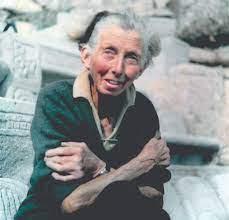
Rowena Cade was a British philanthropist who designed and built the Minack Theatre, Porthcurno.
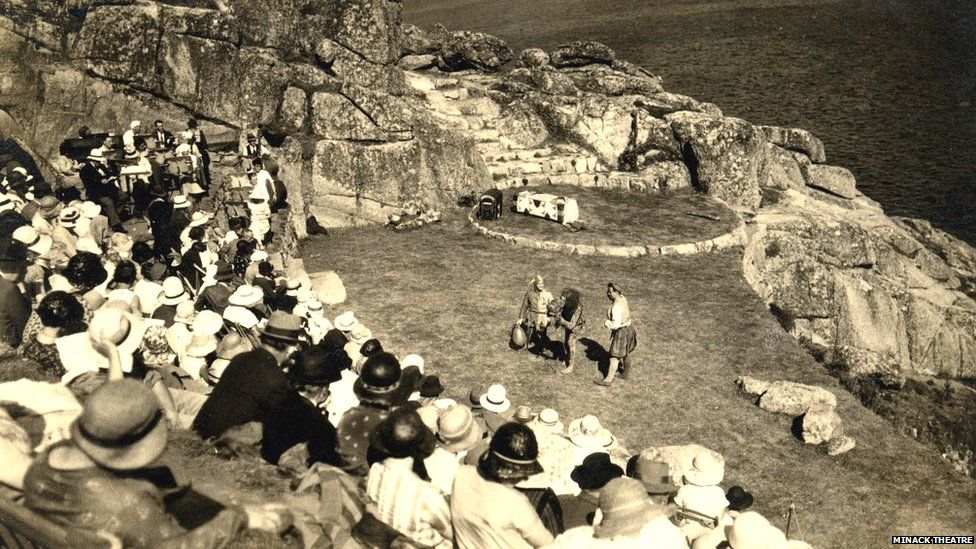
Born in Derbyshire, England in 1893, Rowena Cade moved with her family to Lamorna, Cornwall following the start of the First World War and the death of her father. In the early 1920s, Cade purchased the Minack headland for £100. The story of the Minack Theatre began in 1929, when Cade participated in an open-air production of Shakespeare's A Midsummer Night's Dream. Following its success, the production was repeated the next year; this success continued to grow resulting in the theatre group looking to stage a production of Shakespeare's The Tempest. Cade suggested the Minack headland as a site for the production, and thus began work on creating a suitable outdoor venue.
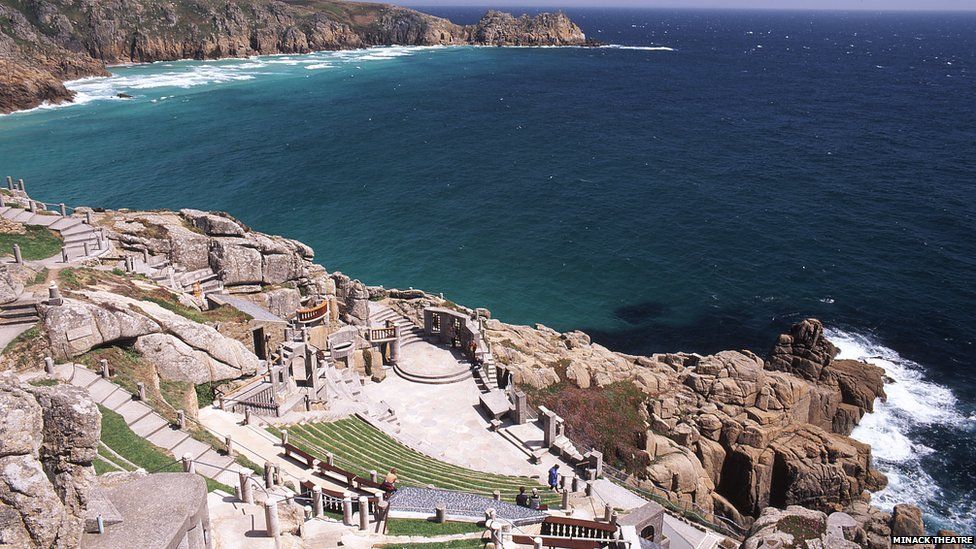
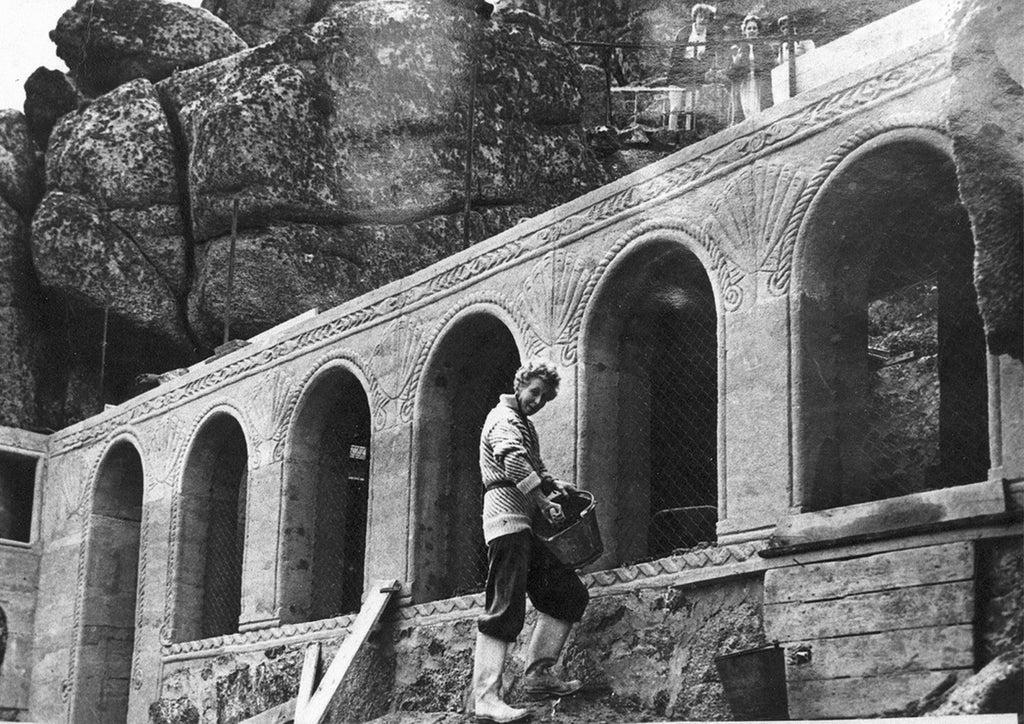
Building the Minack Theatre proved to be a challenge. It was primarily built by Cade, her gardener Billy Rawlings, and several local men; the theatre itself was built between 1931 and 1932, followed by a further six months to build the stage. The majority of the current-day structures were produced using sand from the nearby beach of Porthcurno, as well as concrete; this was much more cost-effective than stone at the time. Rowena carried the materials up the cliff herself using sacks, and was tactfully able to replicate the appearance of stone despite working with concrete. Despite the lack of formal lighting outdoors, Cade innovatively lit the stage using batteries and car headlights. Cade also carried 15ft beams from a nearby wrecked Spanish freighter, which were used to build the dressing room for performers.
The Minack Theatre is laden with inscriptions (engraved using the end of a screwdriver in wet cement) oriented around the names of plays and performances along with their dates, as well as Celtic designs engraved into the concrete, leaving behind a permanent presence of the Minack's creator.
Following a succession of several well-received plays, the Minack Theatre unexpectedly became part of the coastline defences when it was used by the army during the Second World War. The theatre was destroyed in part and had to be rebuilt by Cade and Rawlings.
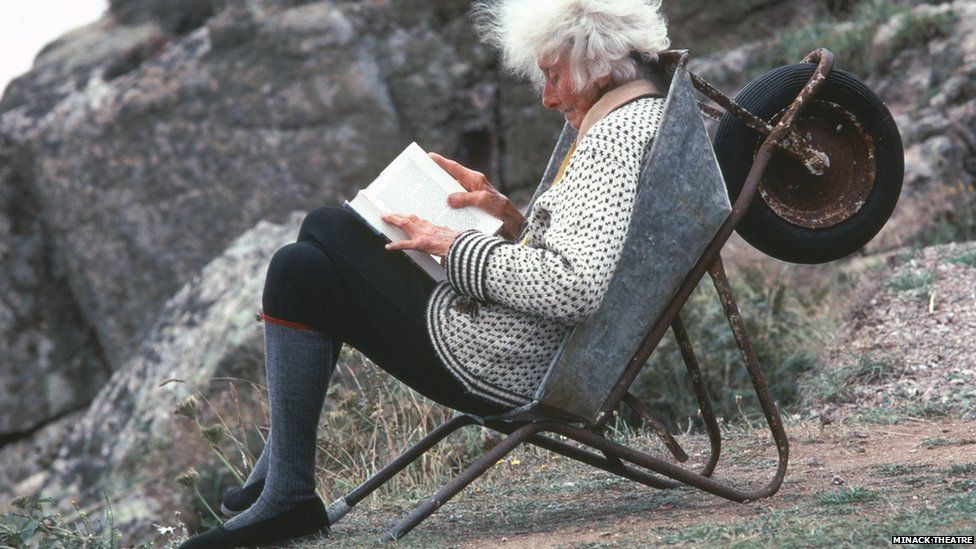
With her determination and talent, Rowena Cade created a successful and unique theatre. She maintained and improved it for the rest of her life, only handing over the reigns in 1976 when Cade was in her mid-eighties. The Minack Theatre was later entrusted to the newly established The Minack Theatre Trust who manage the site to this day.
Rowena Cade died shortly before her 90th birthday on March 26th 1983. Cade's spirit is still very much alive in the ethos of the theatre, and her original etchings are still visible - shells, compasses and waves engraved along the tired seating, and carved into the walkways and steps.
Timeline
Rowena Cade was born in Spondon near Derby, Derbyshire.
The Cade family moved to Cheltenham after Rowena's father retired.
In the 1920s, Rowena's mother became a widow and ended up moving the family from Cheltenham to a rented home in Lamorna.
In the early 1920s, Rowena discovered and purchased the Minack Headland, Porthcurno for £100. This is where she began her journey by building a home for herself and her mother.
Rowena Cade was joined by her younger sister, Katharine Burdekin, in 1922 following the end of Burdekin's marriage.
The Minack Theatre began to take shape in 1929, following a successful production of A Midsummer Night's Dream when Cade decided to find a permanent stage for future productions.
Between the years of 1931-32, Rowena Cade and Billy Rawlings built the Minack Theatre.
In the summer of 1932, the completed Minack Theatre hosted its first performance of The Tempest. Rowena Cade was 38 years old.
In 1976, Cade gave the theatre to The Minack Theatre Trust which was registered as a charitable organisation the same year. Rowena worked closely with the theatre up until her mid-eighties.
On the 26th of March 1983, Rowena Cade passed away in Porthcurno at the age of 89, shortly before her 90th birthday.